2025 National Environmental Forum Consolidates Climate Action and Biodiversity Agenda in El Salvador
The National Environmental Forum brought together key stakeholders to promote integrated solutions to climate challenges and strengthen biodiversity conservation in El Salvador.
© Climate Promise El Salvador
El Salvador contributes less than 0.04% of global greenhouse gas emissions; however, it faces high climate vulnerability reflected in affected lives, lost crops, and damaged infrastructure. Droughts, floods, and hurricanes are a recurring reality for its population.
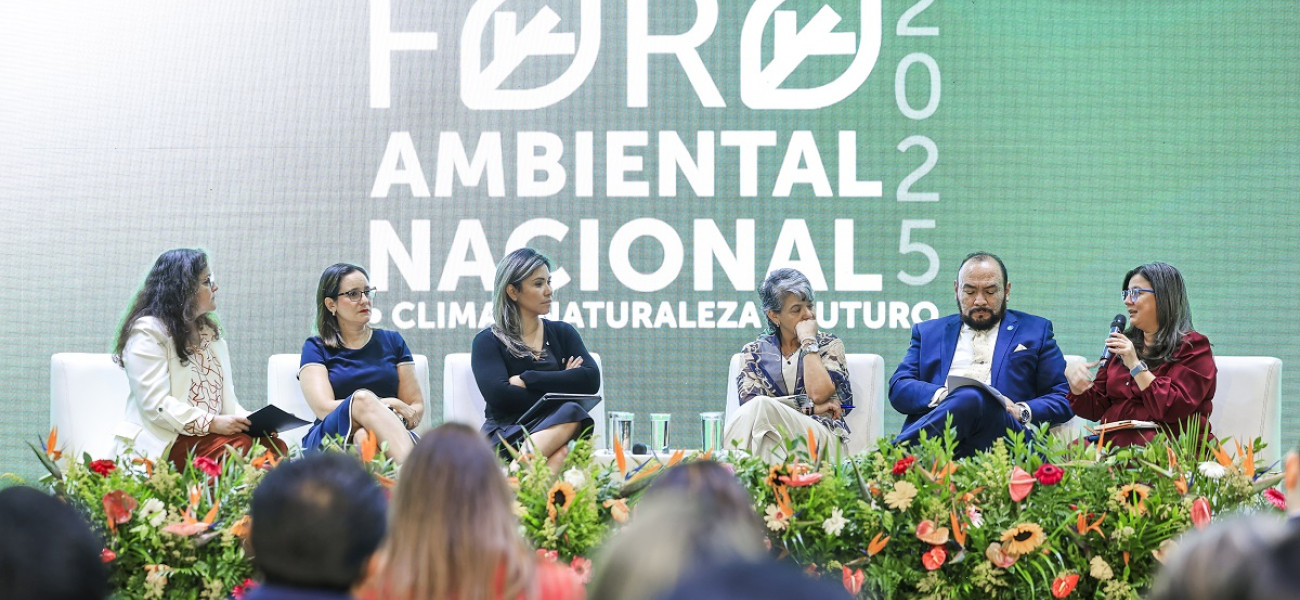
In this context, from December 9 to 11, 2025, the Ministry of the Environment and Natural Resources (MARN, from its acronym in Spanish), with the support of the United Nations Development Programme (UNDP), organized the National Environmental Forum 2025: Climate, Nature, and Future. Over the course of three days, the event provided spaces for coordinating the agendas of climate change, biodiversity, risk management, green finance, resilience, and human development, in line with the Paris Agreement and the Kunming-Montreal Global Biodiversity Framework.
The event brought together public institutions, the private sector, academia, international cooperation, and civil society organizations. The Minister of the Environment, Fernando López, opened the Forum and presented the main advances in the national climate agenda.

© Climate Promise El Salvador
“ “The National Environmental Forum will be a meeting point where scientific knowledge, public policy, and the country’s vision converge to accelerate climate action in El Salvador… We are leaving behind the narrative of risk to build a new one – one of a country that adapts, prepares, and protects its people,” stated Minister López.
“UNDP supports the Ministry of the Environment by providing technical assistance and promoting international cooperation to strengthen climate management and the use of scientific evidence in decision-making,” highlighted Maribel Gutiérrez, UNDP Resident Representative. ”
During the first day, El Salvador’s 2025 Nationally Determined Contributions were presented, as a strategic instrument that establishes national targets for emissions reduction and climate change adaptation. The results of the climate loss and damage study for the agriculture, transport, and housing sectors were also presented. In addition, high-level panels were held on progress and challenges in clean energy, urban development, and sustainable mobility.
The Forum included participation from the Ambassador of Germany in El Salvador, a virtual intervention by the Global Director of the NDC Partnership, as well as representatives from United Nations system agencies, development partners, government institutions, and civil society organizations. The event was made possible thanks to the support of UNDP’s Climate Promise initiative, through the Pledge to Impact program, which is funded by the governments of Germany, Japan, the United Kingdom, Sweden, Belgium, Spain, and Iceland, among others; the Green Finance Innovation Initiative funded by the Swedish International Development Cooperation Agency (Sida); and projects of the Global Environment Facility (GEF).
© Climate Promise El Salvador
Risk Governance and Early Warning Systems
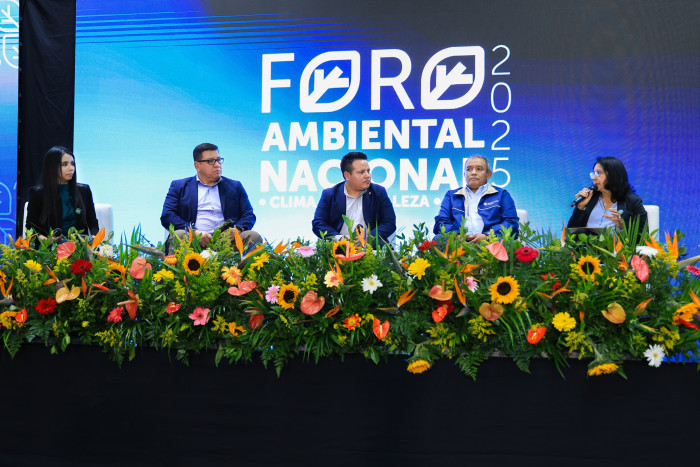
On the second day, the agenda focused on strengthening environmental governance in response to the increasing frequency of extreme climate events. The National Special Commission on Early Warning Systems and Anticipatory Action was presented, an interinstitutional mechanism designed to promote early and timely action in response to high-impact hydrometeorological events.
Rafael Pleitez, Assistant Resident Representative and Chief Economist of UNDP, delivered the presentation “Disaster Risk Reduction as Public Policy: Financing Resilience”. In his intervention, he explained the evolution of the human development approach and highlighted the importance of resilience in integrating the climate agenda, disaster risk reduction, and social development policies. He also underscored the need to incorporate disaster risk management as a national policy framework, aligning economic planning with the social protection of the most vulnerable populations.
Additionally, the formal handover of meteorological stations donated by the Global Green Growth Institute to MARN took place, contributing to the strengthening of the national climate monitoring infrastructure and aligning with the Early Warning for All initiative promoted by the World Meteorological Organization.
© Climate Promise El Salvador
Biodiversity, Green Finance, and Sustainable Tourism as Pillars of National Development
On the third day, the Government of El Salvador presented the National Biodiversity Strategy and its Action Plan 2025–2030, an instrument aligned with the Kunming-Montreal Global Biodiversity Framework that defines priorities for the conservation, restoration, and sustainable management of the country’s ecosystems.
Within this framework, an agreement was signed to carry out the Comprehensive Bioecological Diagnosis of the Salvadoran Reef Ecosystem, which will generate unprecedented scientific information for the management and conservation of the country’s three main reef systems. The agenda also included the presentation of initiatives related to sustainable tourism, biodiversity finance, and national species conservation programs.
With an integrated climate and nature approach, El Salvador – with the support of UNDP and its donors – is advancing toward the construction of a more resilient country: with strengthened institutional capacities and integrated public policy frameworks that harmonize economic development with environmental sustainability and the well-being of its population.
- Country: El Salvador
- Project:
- Contact: