Belize’s Seaweed Farms: A Win for Reef Health
Seaweed farms in Belize have become a success story for reef resilience—posing a model for other countries in the Caribbean.
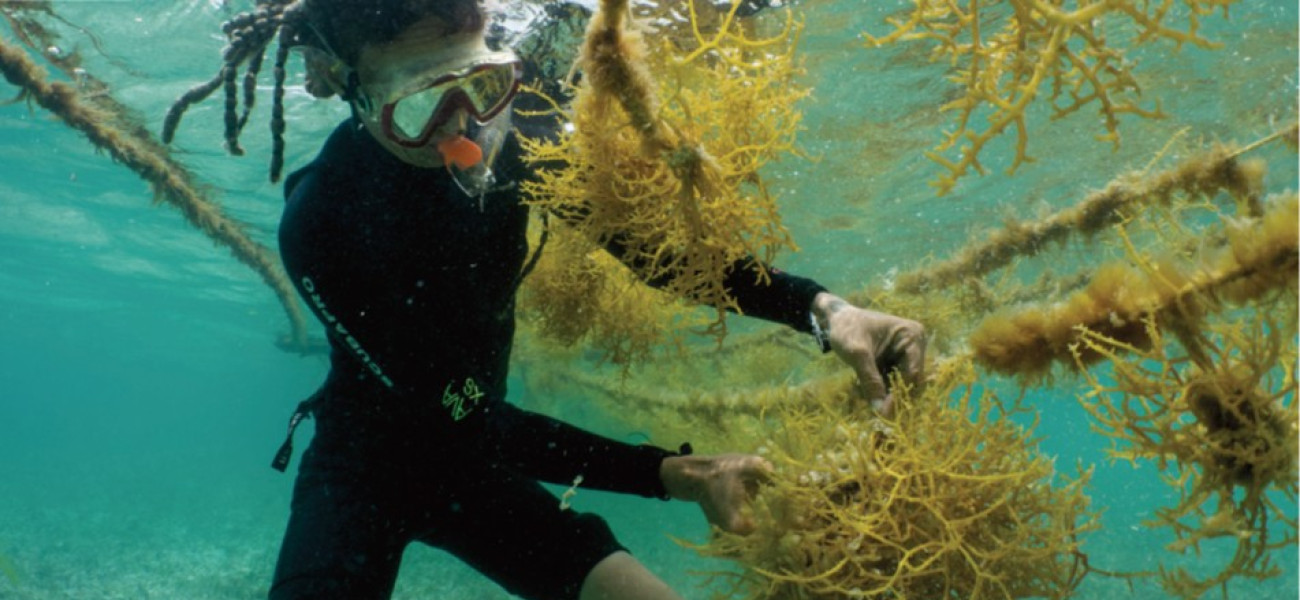
A seaweed farmer harvests seaweed on her farm in Placencia, Belize. This farm is part of a TNC-sponsored program to bring seaweed aquaculture to the area in cooperation with the Placencia Fishermen Cooperative. © Randy Olson
Seaweed farms in Belize have become a success story for reef resilience—posing a model for other countries in theCaribbean. The Nature Conservancy’s CoralCarib initiative hosted a regional seaweed cultivation training in Belize this January, bringing together practitioners from Jamaica, Haiti, and the Dominican Republic. The training was part of a larger effort to strengthen coral reef ecosystems, reduce pressures on fisheries and support alternative livelihoods for coastal communities in the region.
In hands-on exercises, participants worked alongside Belizean farmers to learn the fundamentals of cultivation, from rope preparation and plot design to harvesting techniques. Farmers shared lessons from managing their operations, including the three-month growth cycle between planting and harvest and the ongoing maintenance required to keep farms productive.
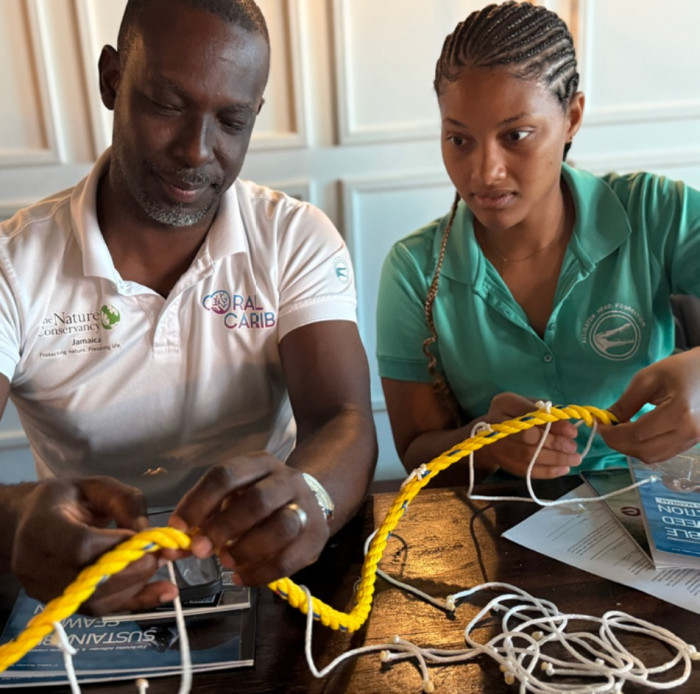
Participants practice foundational rope preparation techniques to set up seaweed cultivation lines © Michele Lopez/TNC Belize
Members of the Jamaican delegation benefited from the example of how seaweed aquaculture can be adapted to diversify income while easing dependence on fishing. While the transition to aquaculture can be difficult, particularly given the delay between initial investment and first harvest, TNC specialists noted that seaweed farming provides fishers with an oceanic crop as well as allows them to remain closely connected to the ocean, an important factor in the success of alternative livelihood programs.
The training included in-class theoretical sessions led by local experts from TNC Belize, as well as hands-on sessions with the Women’s Seaweed Association of Belize.
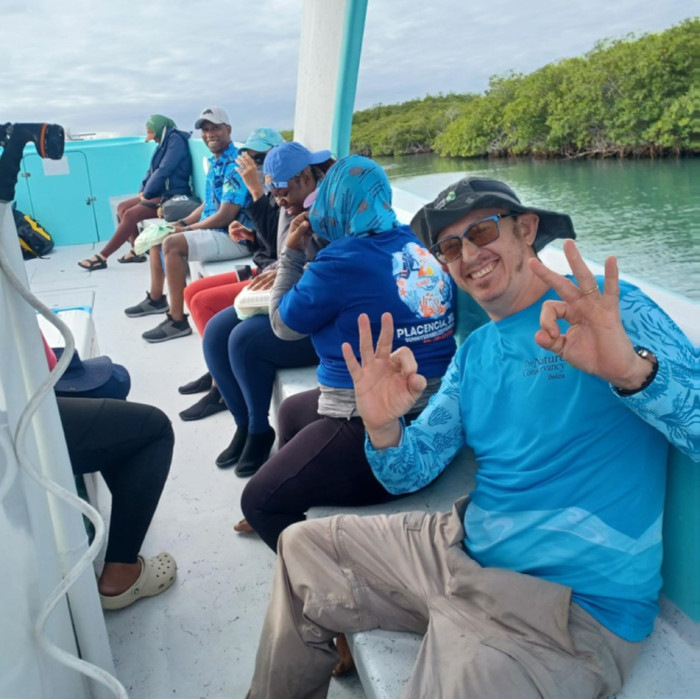
Training participants travel by boat to visit seaweed plots and observe cultivation practices in the field. © Michele Lopez/TNC Belize
At the end of the journey Dr. Dexter Colquhoun Research Program Manager, Alligator Head Foundation, Jamaica shared with us a few words on the importance of the seaweed farms. “Seaweed farming offers an alternative and sustainable livelihood, which is what we are promoting. As we try to reduce the threats to our reef and fisheries, activities like seaweed farming pose an opportunity for fishers to change their livelihoods. We are also promoting other alternatives like pelagic or deep-sea fishing.”
Further reading:
Belize Leading Region For Seaweed Farming- Country: Belize, Jamaica
- Project:
- Contact: