Guatemala Strengthens Its Capacities to Access Climate Finance and Accelerate Climate Action
Through interinstitutional coordination, capacity building, and the development of key tools, Guatemala is advancing the creation of enabling conditions to access climate finance and turn its goals into concrete action.
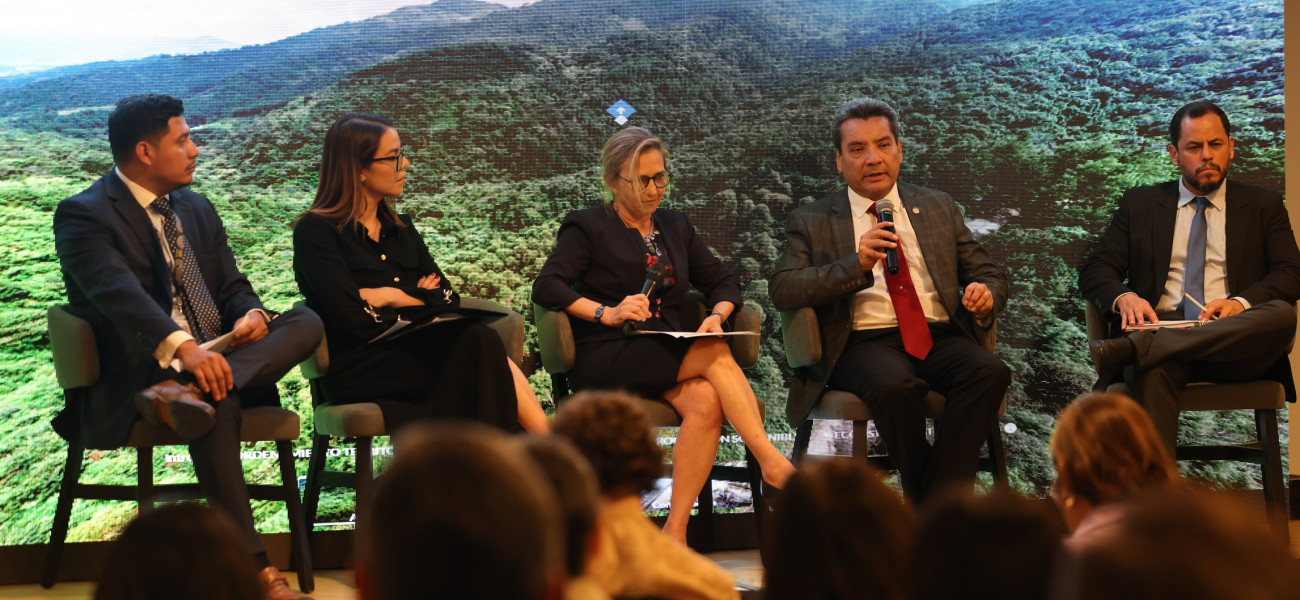
Representatives of the Ministry of Environment and Natural Resources of Guatemala (MARN), the Ministry of Foreign Affairs (MINEX), the Ministry of Public Finance (MINFIN), the Secretariat of Planning and Programming of the Presidency (SEGEPLAN), and GIZ discuss follow-up opportunities and cooperation after the approval of the country program in Guatemala. © Ministry of Environment and Natural Resources of Guatemala (MARN)
To scale up ecosystem-based adaptation (EbA), it is necessary to increase financial flows from both public and private sources. The regional IKI project “Scaling up Ecosystem-based Adaptation Measures in Rural Latin America” supports the integration of EbA into existing financing instruments and financial governance frameworks, with a particular focus on strengthening governance and financial sustainability through diversified funding sources.
With the aim of developing institutional capacities and accelerating readiness for climate finance in Guatemala, the Green Climate Fund (GCF) Readiness Programme co-financed activities aimed at strengthening coordination mechanisms to plan for and facilitate access to climate finance.
With the support of the Readiness project, “Strengthening Institutional Capacities and Accelerating Climate Finance Readiness to Increase Climate Action in Guatemala,” the country has strengthened its institutional capacities to accelerate climate action and ensure the efficient, effective, and transparent use of climate finance.
On March 10, the project's main results were presented, highlighting the consolidation of an inter-institutional coordination mechanism for climate finance management, which defines roles, responsibilities, and processes among the governing entities. In addition, with the project’s support, the No-Objection Procedure required for the submission of proposals to the GCF was validated, strengthening governance and transparency in resource mobilization.
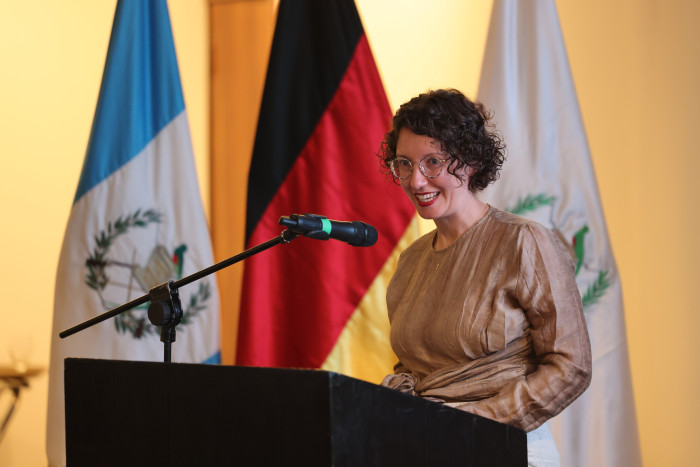
Ms. Sabine Eismann, Counselor at the German Embassy in Guatemala, addresses the audience during the closing event of the Readiness Program in the country. © Ministry of Environment and Natural Resources of Guatemala (MARN)
Furthermore, as a result of a participatory process involving the public sector, private sector, academia, and civil society, Guatemala finalized and validated its Country Programme for the Green Climate Fund – a strategic instrument that guides the prioritization of climate investments in key areas such as ecosystems and forests, water and food security, access to sustainable energy, and the improvement of livelihoods for local communities and Indigenous Peoples.
In terms of capacity building, close to 500 professionals participated in specialized training processes on climate finance, including a modular course developed jointly with Galileo University and the GIZ program for Climate Finance Readiness Training (CliFiT4SE), focused on water and agriculture. In these courses, more than 50% of participants were women, contributing to greater inclusion in the comprehensive management of climate finance.
Another project result includes progress on the Roadmap for the “Voluntary Sustainable Finance Taxonomy in Guatemala,” a tool that establishes common criteria to identify climate action-aligned investments and strengthens coordination among the public sector, private sector, and financial regulators.
As an additional result, a tool is now in place for monitoring, reporting, and verification (MRV) of climate finance, in line with the guidelines of the United Nations Framework Convention on Climate Change (UNFCCC), with the aim of improving planning, accountability, and evidence-based decision-making.
With these results, Guatemala is consolidating enabling conditions to transform its climate ambition into concrete investments, strengthen its population's resilience, and protect its ecosystems.
The project is jointly financed by the Green Climate Fund (GCF) and the German Federal Ministry for the Environment, Climate Action, Nature Conservation and Nuclear Safety (BMUKN, from its acronym in German) under its International Climate Initiative (IKI, from its acronym in German). It is led by the Guatemalan Ministry of Environment and Natural Resources (MARN, from its acronym in Spanish) and implemented by the German Development Cooperation (GIZ, from its acronym in German).
- Country: Guatemala
- Project:
- Contact: